
The procurement of a ready-mix concrete batching plant in the Middle East constitutes a strategic capital investment with profound implications for operational capacity and long-term business viability. The regional market, characterized by projects of immense scale in Saudi Arabia and the UAE, alongside burgeoning development in Qatar, Oman, and Egypt, demands equipment that can perform under stringent technical, environmental, and economic pressures. A simplistic evaluation focused solely on the initial purchase price is inadequate and risky. A comprehensive selection framework must instead triangulate three interdependent pillars: the total cost of ownership, the guaranteed consistency and specification compliance of the output, and the depth and responsiveness of the technical support ecosystem. This analysis provides a structured methodology for evaluating suppliers against these non-negotiable criteria, ensuring the selected ready mix concrete batching plant delivers sustainable value across its operational lifecycle.
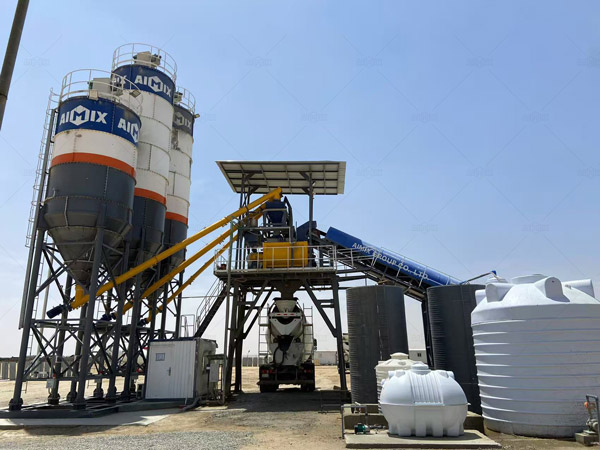
Deconstructing Total Cost of Ownership (TCO)
The purchase invoice represents only the initial capital outlay. A rigorous financial evaluation must model the Total Cost of Ownership, which aggregates all expenses associated with the plant from commissioning through to decommissioning. This holistic view prevents sub-optimization and reveals the true economic impact of the investment.
Capital Expenditure and Operational Expenditure Breakdown
The capital expenditure (CAPEX) includes the concrete batching plant price, costs for optional configurations like advanced dust control or cooling systems, import duties, and site installation costs. However, the operational expenditure (OPEX) is where significant divergence occurs between suppliers. This encompasses energy consumption per cubic meter batched, a critical metric in regions with high electricity costs like the UAE. It includes the consumption rate and unit cost of wear parts—mixer blades, liner plates, conveyor belts—which are heavily influenced by the plant’s build quality and material selection. Labor costs for operation are also a variable, influenced by the level of automation; a highly automated plant may have a higher CAPEX but require fewer operators, reducing long-term OPEX.
Evaluating Efficiency and Downtime Economics
A plant’s efficiency directly correlates with its profitability. Key performance indicators include batch cycle time, accuracy of weighing systems, and water consumption efficiency—a paramount concern in arid Gulf states. More critically, the potential cost of unplanned downtime must be factored into the TCO model. A plant with a lower purchase price but prone to mechanical failure can incur catastrophic losses on a fast-track project in Riyadh or Doha, where delays carry severe contractual penalties. The reliability engineered into the plant’s components, and the local availability of spare parts, are therefore direct financial variables, not merely technical considerations.
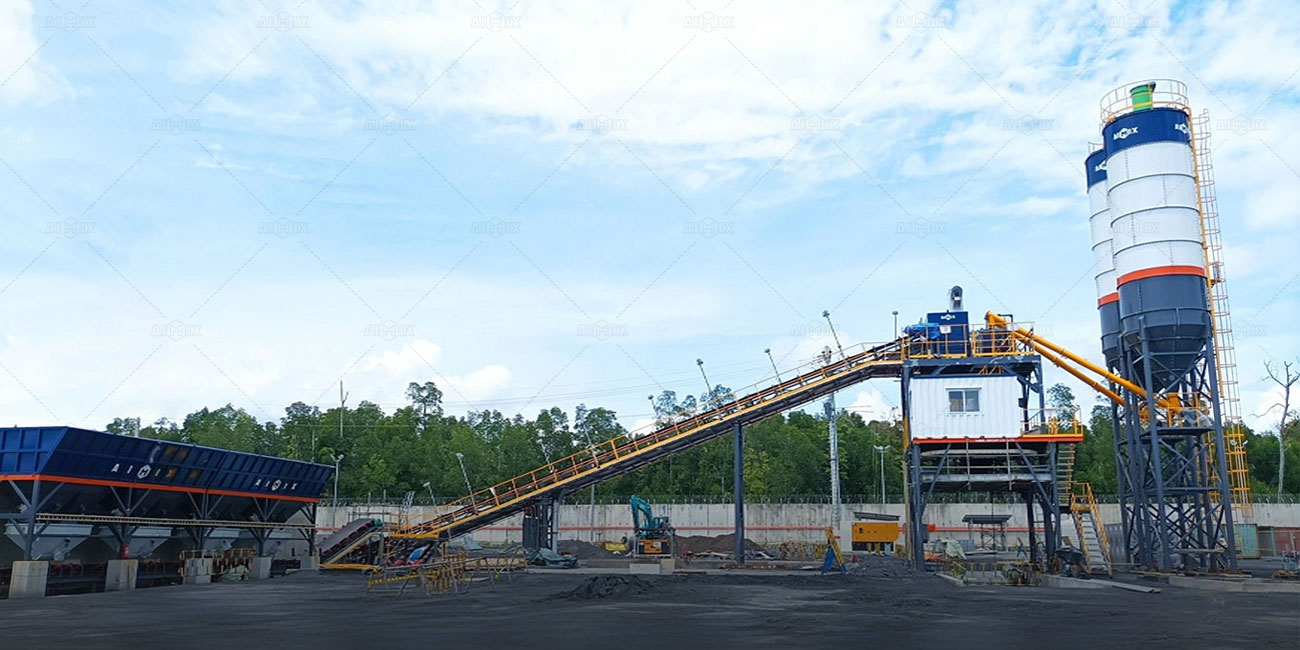
Engineering for Uncompromised Quality and Consistency
The Middle East’s construction landscape is defined by high-specification projects: skyscrapers, mega-infrastructure, and specialized industrial facilities. The concrete produced must adhere to exacting international standards (e.g., BS, ASTM) and often, bespoke project specifications.
Precision Batching and Mix Design Integrity
The core function of the plant is to execute mix designs with absolute fidelity. This necessitates the interrogation of the batching system’s precision. What is the accuracy class of the load cells for cement, aggregates, and water? Does the system incorporate real-time aggregate moisture probes to automatically adjust water addition, a feature essential for maintaining consistent slump in the variable humidity of coastal regions like Dubai or Dammam? The ability to consistently achieve a target water-cement ratio is the single greatest determinant of concrete strength and durability. Furthermore, the concrete batching plant in Saudi Arabia must support the production of complex mixes containing admixtures, silica fume, or fibers, which require precise micro-dosing capabilities and robust mixing action to ensure homogeneity.
Process Control and Data Traceability
Modern quality assurance is digitized. A capable plant must have a control system that logs every batch parameter—material sources, weights, mixing time, discharge time—creating an immutable digital record. This traceability is crucial for compliance and liability purposes on major projects. The system should also feature alarm management for out-of-tolerance batching and production reporting for analysis. In markets like Saudi Arabia, where national quality and standardization frameworks are increasingly robust, this data trail is not optional; it is a prerequisite for supplying concrete to tier-one contractors and government-affiliated projects.
The Service and Support Imperative
The most robust plant is a stranded asset without prompt, expert technical support. The geographical and climatic context of the Middle East makes the after-sales service proposition a critical selection criterion, often differentiating otherwise comparable equipment.
Localized Support Infrastructure and Spare Parts Logistics
The supplier must demonstrate a tangible, local support footprint. This means more than a sales office; it requires a dedicated service center in the region, preferably within the country of operation, staffed by factory-trained engineers. Investigate the location and inventory level of their spare parts warehouse. For a central mix plant in Oman or Kuwait, a central parts depot in Dubai with 48-hour delivery is fundamentally different from one located in Europe or Asia. The supplier’s commitment to holding strategic inventories of high-wear items within the GCC is a direct indicator of their understanding of the market’s need for operational continuity.
Technical Training and Long-Term Partnership
Service extends beyond repair to encompass knowledge transfer. A reputable supplier will offer comprehensive training programs for client operators, maintenance technicians, and quality control personnel at their facility or on-site. This empowers the owner’s team to perform preventative maintenance and basic troubleshooting, enhancing uptime. Furthermore, evaluate the supplier’s willingness to engage as a long-term partner. Will they provide software updates for the control system? Can they offer performance optimization audits after the first year of operation? This proactive, collaborative approach to support transforms the supplier relationship from a transactional event into a strategic alliance that protects your investment for the decade or more of the plant’s service life. In conclusion, the optimal selection balances a defensible TCO, guaranteed output quality, and an ironclad service covenant, ensuring the plant is a cornerstone of productivity, not a source of perpetual operational risk.